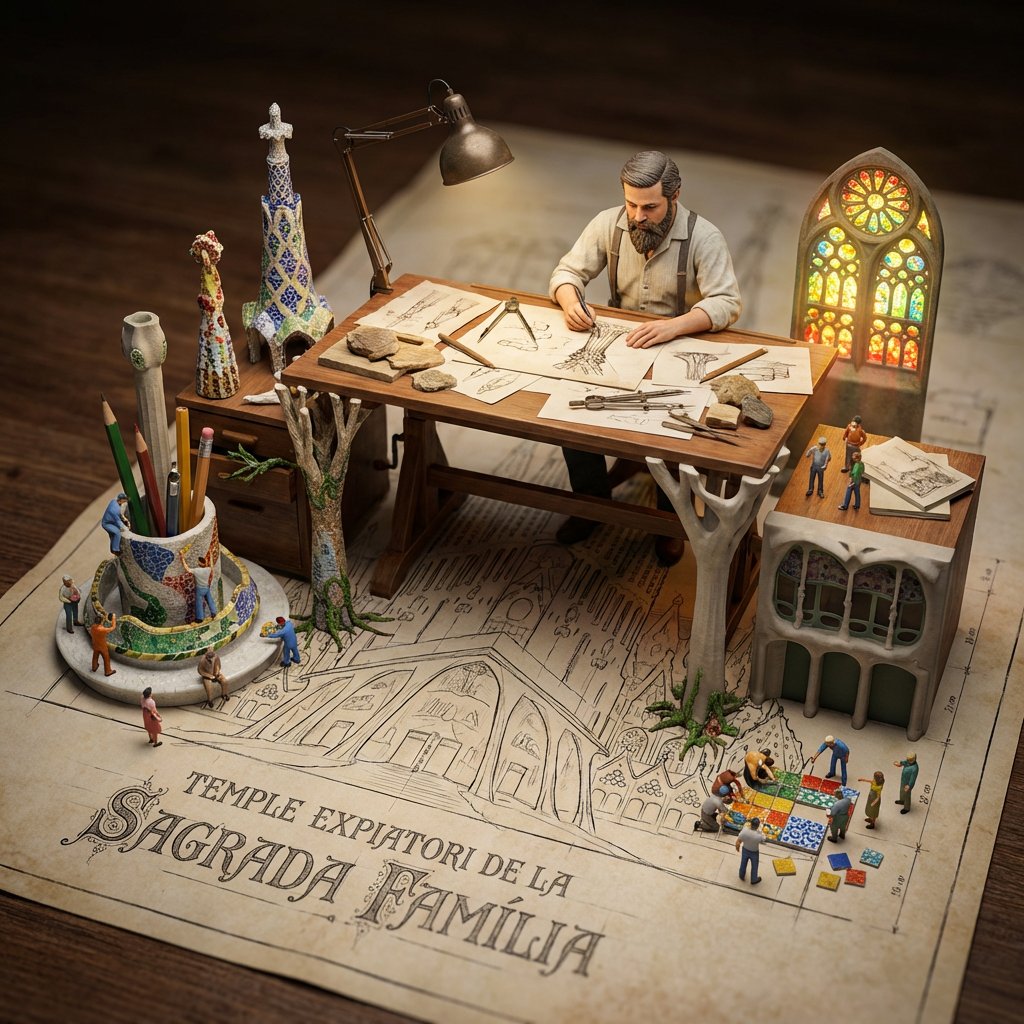
3D Diorama of an Architect's Conceptual Workspace
Tags
Copy prompt
Here is a fun prompt for those of you into architecture. Similar to science prompts I have done in the past. Prompt: Input Variable: [INSERT ARCHITECT OR FIRM] (e.g., Frank Lloyd Wright, Zaha Hadid, I.M. Pei, Antoni Gaudí) System Instruction: Generate a hyper-detailed, macro 3D diorama of an "Architect's Conceptual Workspace." Use the following logic to procedurally fill the scene with maximum density: Profile: Analyze the Input: Identify the Architect/Firm, their Design Style, their Era, and their Signature Building The Vibe: Identify the atmosphere of their work (e.g., Wright = Organic/Harmonious; Hadid = Fluid/Futuristic; Pei = Geometric/Bold; Gaudí = Naturalistic/Whimsical) The Artifacts: Identify 5-7 iconic elements from their buildings (e.g., Prairie Style elements, Parametric forms, Glass pyramids, Mosaic tiles) Container: The Base: A massive architectural blueprint lying flat Texture: The blueprint texture must match the era (e.g., Traditional blueprints, Modern white prints, Hand-drawn sketches) The Title: The blueprint features the architect's most famous building title in architectural typography Workspace: The Desk: A period-accurate architect's drafting table sits on top of the blueprint The Architect: A 1:12 scale figure of the Architect sits at the drafting table Pose: They are in a "Design State" of creation—sketching, building a model, or reviewing plans The Clutter (Density Layer 1): The drafting table is covered in: Drawing sheets and construction documents Period-specific tools (e.g., T-squares, compasses, 3D printers, laser cutters) Material samples and reference books Portrayal: CRITICAL: The architectural concepts are physically invading the drafting table The "Micro-Population": Tiny, microscopic figures (1:87 scale) of the Building Users are interacting with the drafting tools (e.g., Tiny office workers climbing the blueprint tubes; Museum visitors exploring the model pieces; Residents of a housing development arranging the drafting tools) The "Form Bleed": The architectural styles are overgrowing the drafting table (e.g., Fallingwater's horizontal lines extending across the table; Hadid's fluid forms affecting the drafting tools; Gaudí's natural elements growing on the blueprint) The Artifacts: The "Artifacts" (Step 1) are used as functional drafting objects (e.g., A model of a building as a paperweight; Material samples as pencil holders; Architectural elements as measuring tools) Lighting & Atmosphere: Primary Light: An architect's task lamp (Neutral white) illuminating the drafting area Secondary Light: Conceptual energy coming from the models or drawings (e.g., The glow of a 3D-printed model, the shadow of a building form, the light through a window study) Scale: Macro photography with a Tilt-Shift effect to emphasize the tiny scale of the figures vs. the "Giant" architect Output: ONE image, 4:3 Aspect Ratio, V-Ray Render, "Architectural Office" level of detail, Structural/Minimalist Aesthetic