
Visual Illusion Image Prompt Analysis
Categories
Tags
Copy prompt
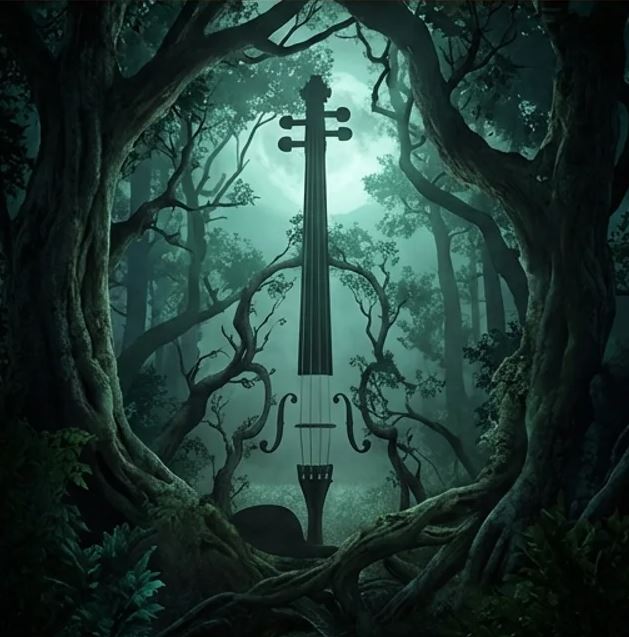
I like these illusion prompts. Here is a basic formula I am using: do this for a guitar <semantic_profile> ANALYZE INPUT VARIABLE and infer: The most recognizable silhouette profile (single iconic angle). The subject’s signature contours (2–4 defining shape traits that make it unmistakable). A matching visual metaphor environment that naturally supports the subject’s identity (mythic, modern, organic, industrial, cosmic, etc.). A material language for foreground “mask” shapes that fits the environment (rock, metal, foliage, architecture, fabric, smoke, coral, ice, etc.). </semantic_profile> <compositional_rules> FRAME: Symmetrical “mask” composition that forces a central negative-space reveal. FOREGROUND: Two (or more) massive forms on the left/right (or top/bottom) that feel native to the inferred environment and appear heavy, graphic, and near-black in value. BACKGROUND: A luminous field (moon / sun disk / neon haze / bright fog / glowing portal / overexposed sky) chosen by AI to maximize silhouette readability. SCALE: Monumental—foreground forms feel gigantic, like cliffs, monoliths, skyscrapers, giant trees, or machinery. CAMERA: Locked-off, clean profile-read angle; minimal perspective distortion; crisp edges. </compositional_rules> <the_illusion> TRICK: The AI must carve the negative space between the foreground forms so it becomes the perfect, undeniable silhouette of the INPUT VARIABLE. The silhouette must be readable instantly without explanation. The “mask” shapes must look natural and believable as real objects in the scene (not cut-outs), yet align with the silhouette with eerie precision. Micro-adjustments: the AI subtly alters cracks, branches, ledges, cables, cloud edges, building outlines, or terrain contours to complete the profile without looking artificial. If the INPUT VARIABLE is complex, the AI chooses the